
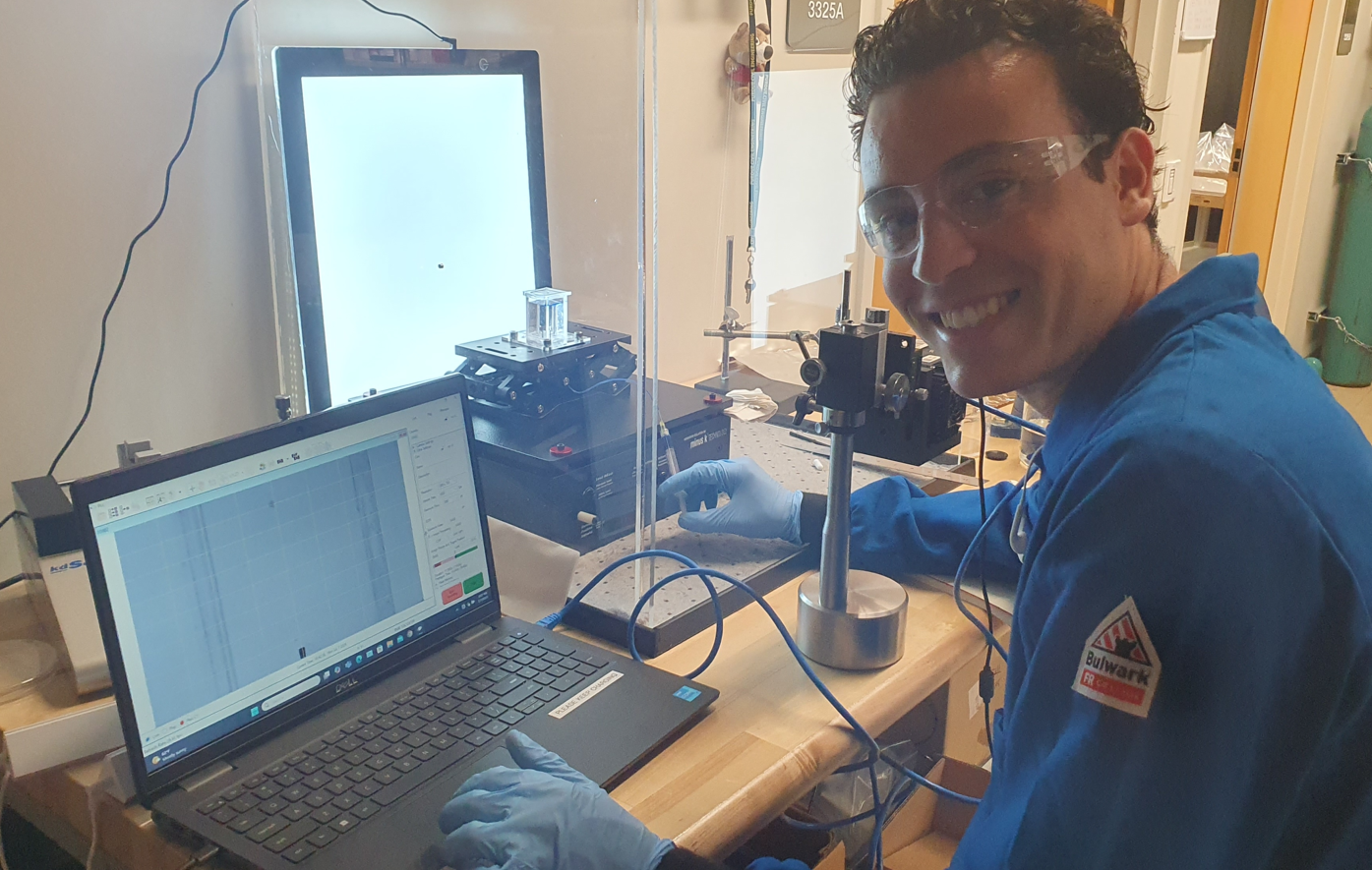
Extrusion-based 3D printing has been capable of printing with a wide variety of materials, but particular interest has risen in soft inks, which have been used in applications not limited to flexible phone cases, soft electronic films, robotics, and synthetic biological tissues. These complex fluids are widely used thanks to their viscoelastic nature, but are limited by their rheological properties, which often results in poor print fidelity. Soft inks generally exhibit shear-thinning non-Newtonian properties, in which the viscosity decreases under high forces. These rheological properties can be modified by varying the structure of the viscoelastic material or by adding colloidal suspensions to help enhance this shear-thinning phenomenon. However, the fluidic properties of non-Newtonian fluids are not well-understood, especially under complex forces that extrusion printers enforce. Therefore, we sought to capture this shear-thinning behavior by extruding inks comprised of polydimethylsiloxane (PDMS) and silica into a dense background fluid (perfluorodecalin), allowing buoyancy forces to mimic ink deformation and stability under a controlled flow. Non-Newtonian droplets exhibit a tailing feature due to varying gradients in velocity profiles between the droplet head and source, making them ideal for our study. We designed and built an experimental system that captured the motion of a droplet with known size and viscosity profile with a high-speed motion camera. By varying rheological properties of inks and droplet sizes, we were able to observe diverse flow behaviors including different velocities, tailing effects, and shape deformations. We shared our empirical data with computational collaborators who used it to validate and refine models of non-Newtonian fluid flow behavior. This project bridges the gap between empirical data and theoretical studies to efficiently investigate viscoelastic properties of soft inks. Our research contributes to the optimization of soft ink design for more precise and consistent extrusion printing in biomedical and engineering contexts.