
Perovskite solar cells (PSCs) have promise as a new class of photovoltaic devices due to their high power conversion efficiency and lower fabrication costs. However, their widespread commercialization is limited by the poor thermal stability of metal halide perovskites, which undergo irreversible chemical degradation at temperatures above approximately 85°C. This motivates the development of heat dissipation strategies to reduce the device operating temperature.
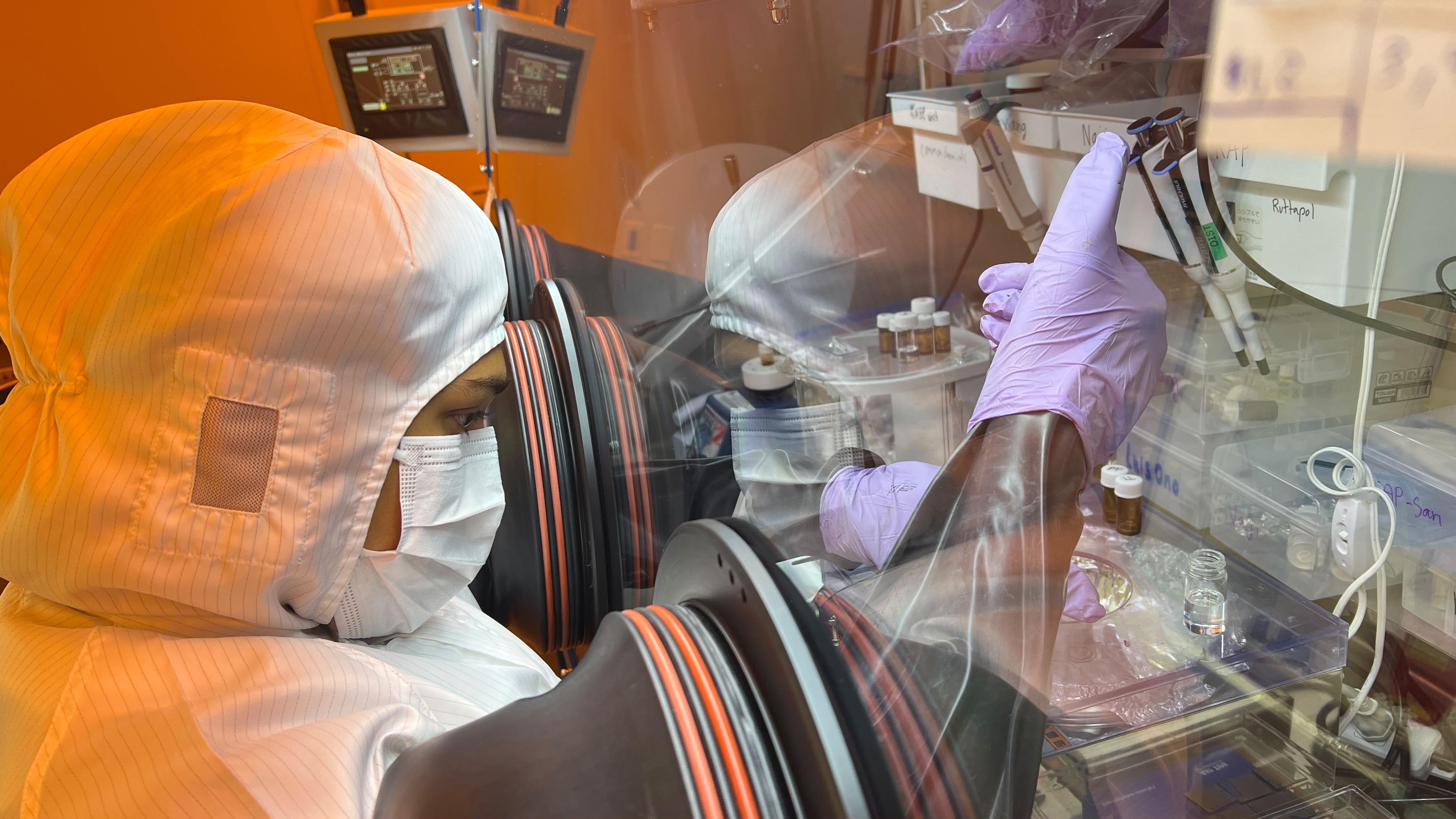
A coupled electrical, optical, and thermal system was built using the finite element method to capture the interaction between photovoltaic operation and device temperature in PSCs. The Gummel scheme was used to improve convergence of the coupled system, while optical, Joule, and Shockley–Read–Hall recombination heating were incorporated into the thermal model. Simulations predicted an internal device temperature of 92.4°C under operating conditions, exceeding the thermal degradation threshold. Optical absorption in the perovskite was identified as the dominant heat source. The predicted temperature showed strong sensitivity to the convective heat transfer coefficient. Tin-based PSCs with an ITO/PEDOT/FASnI₃/C₆₀/BCP/Ag architecture were fabricated for experimental validation, achieving an average VOC of 0.428 V.
To improve thermal management, the influence of encapsulation materials on device temperature was investigated. Aluminum nitride was proposed due to its high thermal shock resistance and low water vapor transmission rate, while hexagonal boron nitride was considered for its high in-plane thermal conductivity and potential for lateral heat dissipation.
This framework provides a foundation for evaluating thermal management strategies to improve the stability of PSCs. Future work will focus on experimentally determining heat convection parameters and evaluating the proposed encapsulation architectures.